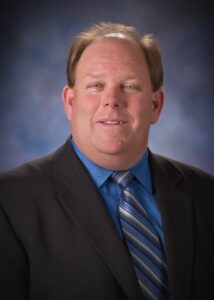
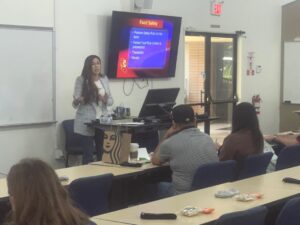
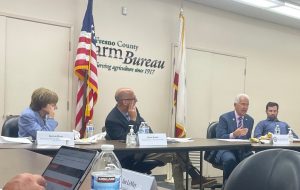
More than 30 participants attended the 2026 American Pima Guide Box Review and Standards Matching Meeting this week at the USDA AMS Cotton Classing Office in Visalia, California. This important event provides an opportunity for cotton industry representation to review, comment on, and approve the official American Pima Grade Standards. The guide boxes have now been approved, and the standards will become effective immediately. Several representatives from USDA AMS were on hand for the event. Attending on behalf of the Association was President/CEO Roger Isom.
NEWS & ISSUES
Welding Fumes Added to the Proposition 65 List
Effective July 17, 2026, the Office of Environmental Health Hazard Assessment (OEHHA) is adding welding fumes to the list of chemicals known to the State of California to cause cancer under the Safe Drinking Water and Toxic Enforcement Act of 1986, sections 25249.5 et seq. of the Health and Safety Code, otherwise known as Proposition 65. Businesses should evaluate their operations to determine if welding fumes are present and if warnings should be posted.
Cotton & Coffee is Tomorrow – Tuesday, July 21, at 7:30 a.m. Central
Cotton Incorporated works to highlight cotton’s natural advantages and uses science to compete with synthetics. During Plastic-Free July, these efforts take center stage through targeted outreach, education, and industry engagement. Join us on July 21st for Cotton & Coffee as we explore how cotton is being positioned as a solution to plastic pollution. The presentation will include and update on marketing efforts for Plastic-Free July from CMO Bev Sylvester.
Meeting ID: 848 1402 8170
Passcode: Cotton1
Next Week – 2026 American Pima Grade Standards Guide Box Review and Standards Matching
Wednesday, July 22, 2026
Visalia, CA Classing Office
9:00am
Please join us next week to review, comment, and approve the six guide boxes of the 2026 American Pima Grade Standards. Once approved, the guide boxes will be used as the reference to match all the 2026 American Pima Grade Standards. The guide box review and the standards matching will both take place the morning of July 22nd.
Industry participation is key to this process, and we hope you all can come and be a part of this important annual event.
For additional information please contact:
Ryan Phillips, Assistant Area Director
E-mail: ryan.phillips@usda.gov
Visalia Classing Office
7100 West Sunnyview Avenue
Visalia, CA 93291
Phone: (559) 651-3015
or
David Rowland, Director
E-mail: David.Rowland@usda.gov
Standardization and Engineering Division
3275 Appling Road
Memphis, TN 38133
Phone: (901) 384-3030
Department of Interior Finalizes Rule on Endangered Species Act
The Department of the Interior and the Department of Commerce has announced they have finalized a rule rescinding the outdated regulatory definition of “harm” under the Endangered Species Act. The action returns the interpretation of the ESA back to its actual text and original intent, which will end years of federal overreach. This reform is based on the Supreme Court’s 2024 decision in Loper Bright v. Raimondo, which requires agencies to follow the single best meaning of a statute rather than contorting laws to fit political agendas. Using the legally justifiable standard, the Services determined that the prior definition of “harm” was an unlawful regulatory intrusion that interfered with private property rights. “For years, federal agencies abused the ESA to obstruct lawful land use and burden American families and businesses,” said Department of the Interior Secretary Doug Burgum. “That approach turned routine activity into a regulatory trap, drove up costs that impacted people’s lives, and expanded federal authority beyond what Congress intended. This action restores common sense, respects private property, provides much-needed certainty for landowners and follows the statute Congress actually passed.”
Department of Commerce Secretary Howard Lutnick, stated “We’re returning the ESA to its foundational purpose to ensure legitimate conservation goals are met without sacrificing economic growth and American prosperity.” The ESA’s core protections remain firmly in place. Actions that directly injure or kill listed wildlife will continue to be prohibited. Existing permits and incidental take statements remain valid and unchanged. U.S. Fish and Wildlife Service Director Brian Nesvik, commented “We can protect species and respect communities at the same time.” According to the Department of Interior, the final rule will reduce unnecessary permitting, cut compliance costs, and eliminate confusion for landowners, small businesses, energy producers, farmers, ranchers and local governments. It brings long overdue financial and regulatory relief to citizens who faced unpredictable delays and unnecessary costs due solely by interpretations that went far beyond the statute.
OEHHA Proposes Inhalation Unit Risk Factor for Acrolein – Why Should You Care?
The California Office of Environmental Health Hazard Assessment (OEHHA) has proposed an Inhalation Unit Risk (IUR) Factor of 7.9 × 10⁻⁴ (µg/m3). Put another way, the risk from acrolein is estimated to be 1,300 excess cancer cases in a million. So, what does that mean? For agriculture this will be a big deal. First, acrolein can be found in many places, but primarily as a product of combustion. It can also be found in tobacco smoke, wildfire smoke, pesticides and food processing. More importantly, the level of the IUR is the concern. At the proposed level, the risk is 10 times higher than that of benzene and is in the same range as diesel exhaust in total. If adopted as is, more pressure would be put on mobile sources to convert to electric. It should be noted that there are large uncertainties associated with the draft proposal and the Association is part of a large coalition digging into the proposal and pushing back on the lack of information and suspect data used to make the proposed determination. This is one everyone should monitor closely in the coming months.
USDA FSA Launches New Online scheduling Tool
The U.S. Department of Agriculture is offering a new option to schedule appointments online with their local Farm Service Agency (FSA) office. Following a successful pilot program, FSA is now using a digital appointment platform across the agency to allow producers to make farm program or farm loan appointments online at their convenience. “Farmers and ranchers work around the clock and should be able to schedule appointments with their local offices at their convenience,” said FSA Administrator Bill Beam. Producers can schedule appointments through FSA’s digital platform, Microsoft Bookings, using a mobile device, tablet, laptop or desktop computer. To assist producers in finding their local FSA office to make an appointment, each county office contact page has a unique link for producers to make an appointment online and shows contact information for the local FSA office and the farm loan team. Appointments may be in-person or virtual with the local FSA office depending on producer preference. Producers can conveniently schedule appointments for a variety of services with both farm program and farm loan staff. For more information, producers can contact their local FSA office.
Science Prevails in Latest Atrazine Assessment
A decades-long effort by grower organizations to ensure science-based regulation of atrazine reached an important milestone this month as the U.S. Fish and Wildlife Service reconfirmed atrazine and simazine do not pose a risk to the continued existence of threatened and/or endangered species. The decision follows years of advocacy by the Triazine Network, a coalition formed in 1995 to represent agriculture in regulatory actions involving atrazine and other triazine herbicides. Through the network, the California Cotton Ginners and Growers Association and Western Tree Nut Association haves worked to ensure growers’ voices are heard throughout the regulatory process. “For more than 30 years, farmers have been asking regulators to utilize sound science and consider how these decisions affect real operations,” Association President/CEO Roger A. Isom said. “Growers from across the country stepped up, helping ensure regulators had a complete picture of what atrazine means to American agriculture. That made all the difference.” This last major regulatory hurdle stems from lawsuits and court orders requiring EPA to evaluate pesticide impacts on threatened and endangered species under the Endangered Species Act. As part of that process, EPA requested a biological opinion from the U.S. Fish and Wildlife Service. The Service ultimately concluded atrazine and simazine can continue to be used without jeopardizing protected species. While this decision represents an important milestone, the work is not finished. Activist groups continue to use litigation and public-fear campaigns to challenge important crop-protection tools. The Triazine Network remains engaged to ensure future decisions involving atrazine and simazine are grounded in the best available science. Continued grower involvement will be critical as EPA works to finalize the reregistration process for this key crop protection tool.
US Supreme Court Hands Down Favorable Ruling in Durnell vs. Monsanto Case
This past week, the U.S. Supreme Court voted 7-2 affirming that the Federal Insecticide, Fungicide, and Rodenticide Act (FIFRA) expressly preempts state-law-based failure-to-warn claims when the U.S. Environmental Protection Agency (EPA) has made a definitive determination on product safety. It is believed this decision will bring “containment” to the ongoing Roundup litigation. For years, US EPA has repeatedly determined that glyphosate is not likely to be carcinogenic. In fact, many leading independent regulatory bodies worldwide, including the European Food Safety Author have come to the same conclusion. Association President/CEO Roger A. Isom stated, “Once and for all the Supreme Court has brought an end to the meritless litigation and made a decision that gives farmers certainty that regulatory decisions on pesticide labels will be based on sound and proven science.” In the Durnell case, EPA would have had to include a cancer warning on Roundup’s label despite clear science showing otherwise. This ruling ends the uncertainty surrounding glyphosate, and gives farmers protection against states making conflicting, and misleading label requirements contrary to FIFRA.
2026 American Pima Grade Standards Guide Box Review and Standards Matching
Visalia, CA Classing Office
9:00am
Please join us to review, comment, and approve the six guide boxes of the 2026 American Pima Grade Standards. Once approved, the guide boxes will be used as the reference to match all the 2026 American Pima Grade Standards. The guide box review and the standards matching will both take place the morning of July 22nd.
Industry participation is key to this process, and we hope you all can come and be a part of this important annual event.
For additional information please contact:
Ryan Phillips, Assistant Area Director
E-mail: ryan.phillips@usda.gov
Visalia Classing Office
7100 West Sunnyview Avenue
Visalia, CA 93291
Phone: (559) 651-3015
or
David Rowland, Director
E-mail: David.Rowland@usda.gov
Standardization and Engineering Division
3275 Appling Road
Memphis, TN 38133
Phone: (901) 384-3030