Over 1,000 farmers, farmworkers, business owners, teachers, medical agency staff, students and elected officials showed up at the Capitol to protest the “State Water Grab” contained in the State Water Resources Control Board’s (SWRCB) proposed Water Quality Control Plan for the San Francisco Bay/Sacramento-San Joaquin Delta Estuary (the “Bay-Delta Plan”) and the supporting proposed final Substitute Environmental Document (“Final SED”). The proposal would require “unimpaired flows” on the Stanislaus, Tuolumne and Merced rivers during critical times of the year, which would ultimately mean a loss of 40% to 60% of the water used those areas. This will be devastating not only to agriculture but to everything in Merced, Stanislaus and San Joaquin Counties. In interviews following the Rally, Association President/CEO Roger Isom, who participated in the Water Rally, stated “this is not only a water grab, it is a clear signal that the State Water Board has no consideration for life in the San Joaquin Valley. Anyone who questions that should look no further to the west side of the San Joaquin Valley devastated by similar measures that eliminated water coming to that area. Fresno County went from being the number one cotton producing county in the world to outside of the top 100. More than 20 cotton gins and the over 1,000 people involved in those operations lost their jobs, and the populations of salmon and delta smelt are no better off today, then they were back then. This new proposal will have the same impact to the economies of Merced, Stanislaus and San Joaquin counties and towns like Denair and Ballico will look like Mendota and Firebaugh. Today is the day we stand up and say enough is enough. And today the state’s agricultural industry did just that!”
NEWS & ISSUES
Final Mapped California Cotton Acreage
The Pink Bollworm Program under the California Department of Food and Agriculture has released their final mapped numbers for 2018, including the Pima and Upland acreage splits. Final acreage numbers for California put Pima at 209,945 acres and Upland at 47,925 acres for a total of 257,870 acres statewide.
This represents a 0.1% increase in Pima acreage and a 44.6% decrease in upland acreage as compared to 2017. This represents a 12.6% decrease in overall cotton acreage for 2018.
Pink Bollworm Program- Silverleaf Whitefly Report 7/30/18-8/10/18
The California Department of Food and Agriculture’s Pink Bollworm Program has released its report for monitoring Silverleaf Whitefly. The program monitored for whitefly and other cotton pests from July 30, 2018 to August 10, 2018. For the full report, please follow the button link below:
Ratepayer Protection Network
In July the Ratepayer Protection Network group was established to protect ratepayers, improve wildfire preparedness and response and advocate on behalf of ratepayers as Sacramento considers new policies to deal with California wildfires. The California Cotton Ginners and Growers Association has joined the Ratepayer Protection Network to help make sure our issues are addressed.
Responding to the escalating number and costs of California wildfires, the State Legislature formed a Conference Committee on Wildfire Preparedness and Response, responsible for improving rules for utilities to prevent, mitigate and respond to wildfires caused by utility equipment.
This Conference Committee will set the stage for how California handles future major incidents, including who is held accountable for covering the costs of catastrophic wildfires. They will be meeting throughout August to discuss various topics.
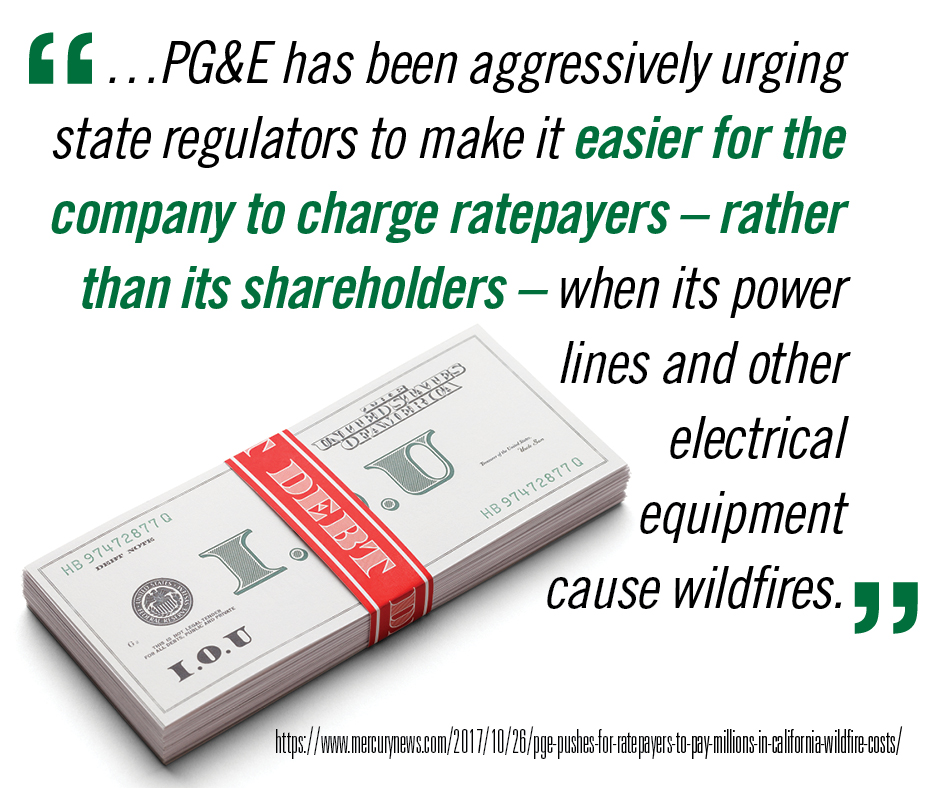
As you are well aware, we Californians already pay some of the highest utility rates in the country. It is likely that current legislation would worsen these burdens by providing a bailout for utilities and major new costs – all at the expense of California families and businesses. The Ratepayer Protection Network is giving a voice to ratepayers.
California’s ratepayers urge the Conference Committee to protect ratepayers from these unfair impacts and hold utilities and their shareholders accountable for making their systems safer.
To learn more about the Ratepayer Protection Networks please visit: www.RatepayerProtection.Network
Cotton Board Advisor Positions Available
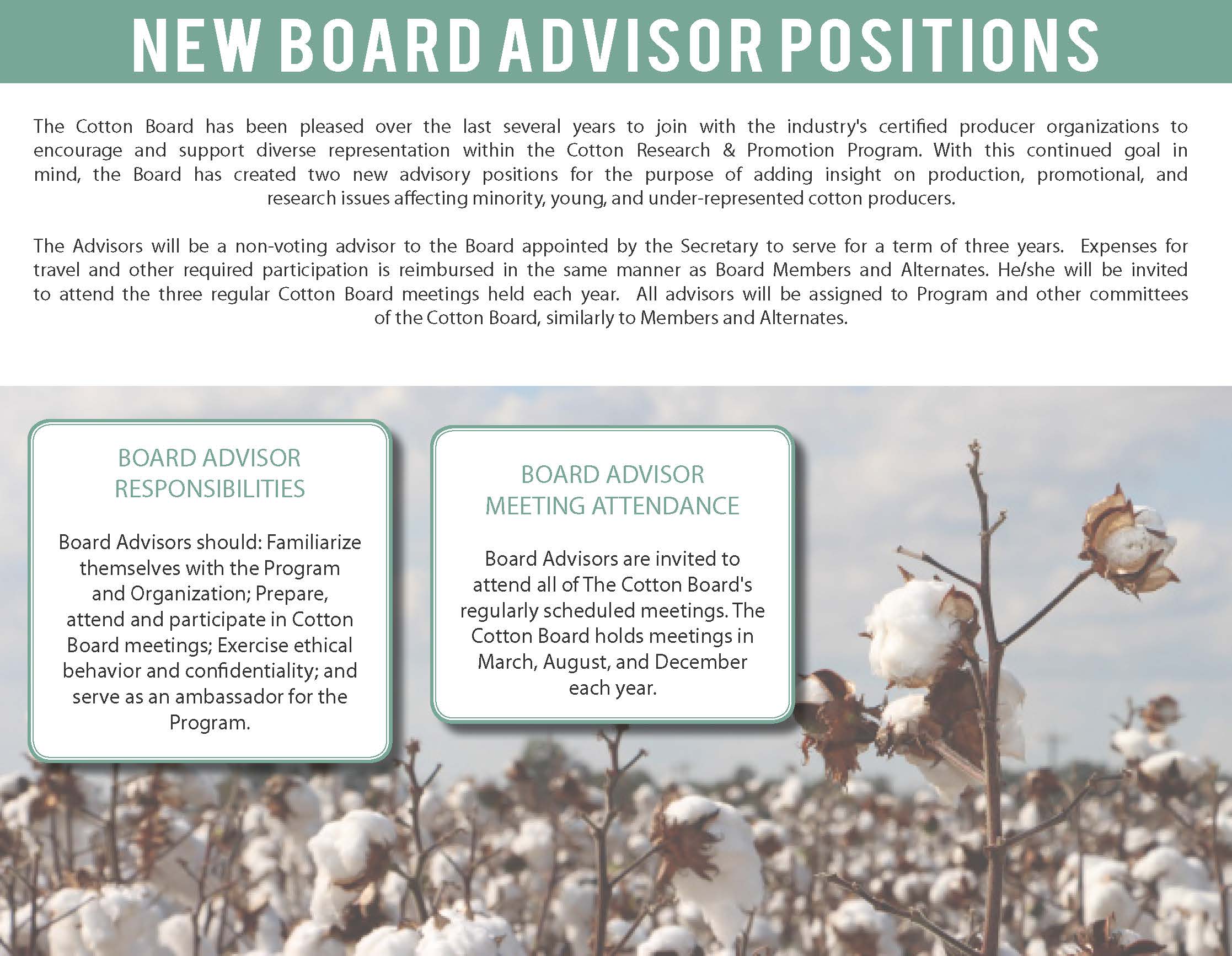
The Cotton Board has two new advisory positions designed to represent the voices and issues faced by under-represented cotton producers such as minorities and the youth. Ideal candidates should familiarize themselves with the organization, attend and participate in Cotton Board meetings, and remain ethical and confidential while serving as an ambassador for the program.
Advisors are appointed by the Secretary and are non-voting. Their three-year term will begin at the start of 2019. Advisors are welcome to all of the Cotton Board’s regularly scheduled meetings which are held in March, August, and December each year. Travel and participation expenses will be reimbursed by the Cotton Board.
For interested candidates, please refer to the information below and complete the fillable form attached. Completed forms are to be submitted to Tom Eubank via e-mail at teubank@cottonboard.org no later than Wednesday September 5th.
Californians Prioritizing Affordability and Safety
Irrigated Lands Fees Set to Increase This Year
The State Water Resources Control Board is looking to increase the per acre charged to growers through their Irrigated Lands Regulatory Program (ILRP) this year, adding to the list of State Agencies increasing the cost of compliance to do business in the state. Earlier this month, the SWB proposed the increases, and announced that they will be taking the recommended fee increases before the Board during the September Board Meeting. The ILRP program is locked in to increase by 8.9%, going from .87 cents/acre, up to .95 cents/acre. The ILRP program has still yet to reach full enrollment of all irrigated acres within the state, and the development of these newer programs will be supplemented by fees collected elsewhere in the state. There are still two regions that have yet to adopt the order, or are in the process of developing coalitions to represent growers for that specific area. Usually, SWB staff include up to 6% of their collected revenue as part of their “Reserve Funding” from year to year. This fund helps offset some of the proposed fee increases, however, staff has put in place a plan to reduce the amount collected year to year to help offset future fee increases. The fund will decrease to 4% starting this upcoming season.
State Water Board staff has noted that numerous permit programs that operate under their guidance are severely underfunded, and that fee increases are necessary to maintain proper operation of these programs. CCGGA has attended several of these fee workshops and tried to find a working solution outside of charging stakeholders (grower) more for the same amount of work year after year. Unfortunately, SWB staff has also proposed a 20% increase in fees to be broken up over the next 3 years to help bring revenue closer to actual expenditures for these programs. The Association will continue to fight against these unwarranted fee increases. Stay tuned.
$9.7 Billion More for the Same Amount of Energy
Pink Bollworm Report- Silverleaf Whitefly Report
The California Department of Food and Agriculture’s Pink Bollworm Program has released its report for monitoring Silverleaf Whitefly. The program monitored for whitefly and other cotton pests from July 16, 2018 to July 27, 2018. For the full report, please follow the link below: