After a lengthy registration process cotton growers in California have another tool to help combat whitlefly. Bayer CropScience has received the registration for its new insecticide Sivanto from the California Department of Pesticide Regulation (CDPR)). Sivanto, which was developed to control devastating sucking pests on fruits and vegetables as well as most broadacre crops, will be available for the 2015 growing season. Sivanto is a novel systemic insecticide for the control of major sucking pests such as aphids, whiteflies, hoppers, psyllids, and other key insects, and acts effectively on all mobile stages including larvae and adults. It can be used on pome fruits, citrus, vegetables: cucurbit, fruiting, leafy & brassica; winegrapes, melons, alfalfa and cotton. Sivanto is based on the active ingredient flupyradifurone which belongs to the new chemical class of butenolides. It is also important to note that when applied at proposed label rates, Sivanto presents no effects on honey bee colony development. Finally, another tool in our battle against whitefly. Remember, NO STICKY COTTON!
NEWS & ISSUES
Heat Illness Changes Are Now Final
It is now official. CalOSHA’s proposed changes to the Heat Illness Prevention Standard will become effective as of May 1. The major changes include the following:
- – Water must be “fresh, pure, suitably cool” and located as close as practicable to where employees are working
- – Shade must be present at 80 degrees F
- – Shade must accommodate all employees working on the site
- – Employee must be provided a minimum 10 minute cool-down period every two hours when temperatures hit 95 degrees F
- – Employees taking a “preventative cool-down rest break” must be monitored for symptoms of heat illness
- – New training requirements covering employers’ responsibilities, employees’ rights and appropriate first aid and emergency responses
The Association is currently updating all of our member’s and our client’s Heat Illness Prevention Plans. We will also be conducting trainings in the next few weeks to make sure our members have been trained on the new requirements.
FOR IMMEDIATE RELEASE:
CONTACT:
Roger A. Isom
California Cotton Ginners and Growers Associations
Western Agricultural Processors Association
Phone: (559)252-0684
Fax: (559)252-0551
email: roger@ccgga.org
California Cotton Ginners and Growers Associations and Western Agricultural Processors Association Announces the Hiring of Director of Regulatory Affairs
The California Cotton Ginners and Growers Associations (CCGGA) and the Western Agricultural Processors Association (WAPA) are pleased to announce Jodi Raley has joined the organization as their new Director of Regulatory Affairs. Ms. Raley will be graduating from California State University – Fresno, with a degree in Ag Education – Communications this spring. Ms. Raley was born and raised in Tollhouse. Raley is a member of Alpha Zeta, and is the current Chancellor for the chapter at CSU Fresno. Raley has previously worked as an intern for the California Fresh Fruit Association and the California Olive Oil Council. Ms. Raley will officially begin her duties on March 31st on a part time basis and will begin full time following graduation. As the Director of Regulatory Affairs, Ms. Raley will be responsible for regulatory issues with respect to cotton growers and ginners, as well as the tree nut hulling and processing industries. Specific areas will include water, air quality, pesticides and environmental issues.
The California Cotton Ginners and Growers Associations are voluntary dues-based organizations representing cotton growers and cotton gins throughout California. The Western Agricultural Processors Association is a voluntary dues-based organization, and represents the tree nut hulling and processing industry on regulatory and legislative issues ranging from energy and air quality to labor and food safety. All three organizations are operated and managed in the same offices in Fresno, California.
CCGGA in Action on Proposed Night Work Standard
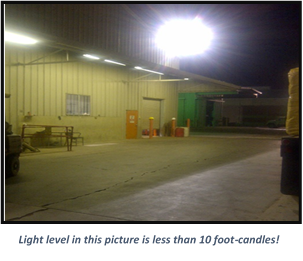
The CA Cotton Ginners and Growers Associations (CCGGA) attended the recent CalOSHA Advisory Committee on the proposed standard for “Agricultural Operations during Hours of Darkness (between Sunset and Sunrise)”. The proposed standard would require employees working around equipment at night to wear reflective vests and for employers to provide lighting at a level of 20 foot-candle power within 25 feet of any equipment. The standard was in response to a petition by California Rural Legal Assistance (CRLA). CRLA is pushing for the standard because they accuse farmers of shifting work to nighttime hours to avoid the new heat stress regulations. CRLA, along with United Farm Workers (UFW), made accusations that farmworkers are subject to sexual harassment due to working at night. CRLA further commented that Asian farmworkers (??) have very poor eyesight and it makes for unsafe work conditions. CCGGA and the California Farm Bureau Federation both made presentations on actual light measurements taken at night. WAPA’s points were based on the fact that 10 foot-candle light power cannot be met by any equipment manufacturer’s standard lighting at 25 feet. Furthermore, CCGGA pointed out that the only way to meet the proposed standard was to bringing in additional portable lighting such as the diesel fired, generator powered lighting that you see on the highway by Caltrans. Lastly, CCGGA showed pictures of an area lit to a level of only 6.8 foot-candles, where a worker could see fine without any issues, including reading documents if necessary. CCGGA also asked CalOSHA what accident data they had to support such changes, to which no response was received. This is no surprise, as CalOSHA recently adopted the most recent changes to the Heat Illness Standard without a shred of evidence, simply due to the threat of a lawsuit by the UFW. Based on some of the comments by CRLA and UFW, and the fact they were unwilling to negotiate on the any of the proposed revisions, we can expect to see another lawsuit or to see CalOSHA simply adopt more regulations. Representing CCGGA at the meeting were President/CEO Roger Isom and WAPA’s Director of Environmental and Safety Services Elda Brueggemann.
Incentive Money for Tractors are Available
USDA NRCS is accepting applications incentive funding under the EQIP National Air Quality Initiative for the 2015 fiscal year. The purpose of the plan is to replace and destroy off-road tier 0 farm equipment. The older equipment would be turned over and destroyed. Incentive funding would be provided to applicants that qualify to be used to replace the destroyed tractor with newer, cleaner technologies. Current model-year diesel engines are available with inventive funding.
NRCS is opening the application period to multiple times throughout the year in order to encourage more applicants. Forms and applications should be submitted to said producer’s respective county Service Center. Applicants should apply prior to:
- April 17, 2015
- June 19, 2015
- July 17, 2015
Applications will be processed quickly if all of the proper information is present. If you are interested in enrolling, please find click on the links below for the proper information.
Service Center Directory: http://offices.sc.egov.usda.gov/locator/app?state=CA
EQIP: http://www.nrcs.usda.gov/wps/portal/nrcs/detail/ca/programs/?cid=nrcs144p2_063939
NAQI: http://www.nrcs.usda.gov/wps/portal/nrcs/detail/ca/programs/financial/eqip/?cid=stelprdb1247003
CA’s Healthy Workplaces, Healthy Families Act of 2014 (PSL)


CA’s Healthy Workplaces, Healthy Families Act of 2014 (PSL)
- PSL Applies to All CA Employers, Regardless of Size
- Your Current PTO Plan Does NOT = Compliance!
- New Employment Posters and Notice Requirements Went Into Effect on 1/1/15
NOW YOU NEED TO GET READY FOR JULY 1, 2015!
This law has lots of complicated angles…up to and including employee relations!
Attend TPO’s PSL Compliance Briefings to learn more about:
- – Eligibility
- – Accrual, Carryover, and Use
- – Rates of Pay
- – Impact on Current Paid Time-Off Policies
- – Coordination with Other Laws
- – New Paycheck Reporting Requirements
- – Penalties for Non-compliance
- – Assessing the Financial Impacts
- – and more…
We will build on the information covered in the TPO Annual Conference and provide a checklist to follow so that you are confident and ready for implementation on July 1!
Now it is time to update your Employee Handbook. Contact TPO for assistance!
There is No Charge for TPO Members to Send One Person – Others Pay $35
TWO SCHEDULED OPTIONS:
TPO Monterey: April 15th, May 14th, June 17th from 9:00am – 10:30am
Webinar: April 22, May 19th, June 24th from 9:00am – 10:3am
Additional Scheduled Briefing Dates… Go to http://www.tpohr.com/training-calendar/ to register, or contact Amber at 831.647.7292 or ambera@tpohr.com
THE BOTTOM LINE:
The law requires either one hour of sick leave for every 30 hours worked or three days of sick leave per year.
THIS IS A GAME CHANGER!
CCGGA HOSTS LEGISLATORS AT KITCHEN DINNER EVENT IN SACRAMENTO
 Growers Chairman Steve Wilbur Talking Issues with Assemblyman James Gallagher
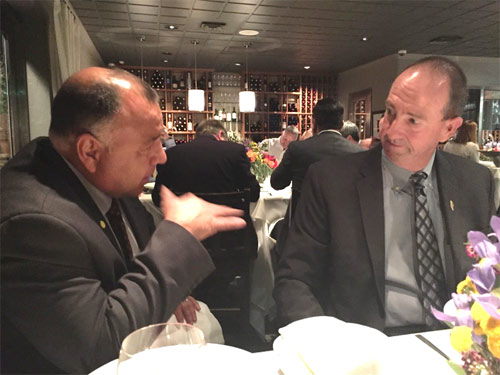 Assemblyman Freddie Rodriguez Talking with Ginners Chairman Greg Gillard
Drought Takes Its Toll on California Cotton Acres
The fourth consecutive year of drought is leaving a lasting impression on the California cotton industry. A fourth consecutive year of drought coupled with depressed prices, is leading California cotton growers to plant less acres in 2015. Based on a survey conducted in early March, the California Cotton Ginners and Growers Associations are currently estimating cotton plantings in 2015 to be at 135,000 acres of pima and 35,000 acres of upland for a total of 170,000 acres. Now, this is preliminary and a lot can happen between now and when things are actually planted, but based on the survey this is our best estimate. If it play out, it will be represent at 12% decrease in pima acreage and a 38% decrease in upland acreage in California as compared to 2014. With a zero allocation in surface water and a dwindling supply of groundwater2015 looks to be a rough year for all of agriculture.
CE Credits Available on Pesticide Breakout Session – 25th Annual CA Cotton Growers Association Meeting
We have been approved to have 1.5 hours of CE Credits for the Pesticide Breakout Session, so mark your calendars for the California Cotton Growers Associations (CCGA) 25th Annual Meeting to be held at the Visalia Convention Center on March 6, 2015. This year’s Annual Meeting will begin 9 am with concurrent sessions on Pest & Products Chaired by Pete Goodell, Varieties – Trials & New Releases Chaired by Bob Hutmacher, and Water – Issues and Irrigation Efficiency Chaired by Dan Munk. Please RSVP to Shana via email at shana@ccgga.org or call (559) 252-0684. We hope to see you there!
2015 Growers Annual Meeting Agenda
CA Cotton Growers 25th Annual Meeting Flyer, Registration Form & Preliminary Agenda
CA Cotton Growers Associate Member – Annual Mtg Sponsorship/Exhibitor Flyer
CCGGA Hosts Legislators at “Kitchen Dinner” Event in Sacramento
The California Cotton Ginners and Growers Associations hosted Assemblyman Freddie Rodriguez, Assemblyman Bill Dodd, Assemblyman James Gallegher, Assemblyman Marc Levine and Senator Anthony Cannella as part of the Annual Agricultural Presidents Council (APC) “Kitchen Dinner” Event in Sacramento this past month. This event is a special “invitation only” event held at the “Kitchen Restaurant” in Sacramento for select members legislators and sponsored by members of the APC. The legislators have a sit down dinner with the hosting organizations in essentially a one-on-one format for the evening. Co-hosted by the agricultural organizations that make up the APC, this year’s event attracted 25 legislators. Agricultural organizations co-hosting the event were the Western Agricultural Processors Associations, California Citrus Mutual, California Fresh Fruit Association, California Rice Commission, California Strawberry Commission, Western Plant Health Association, Far West Equipment Dealers Association, and California Agricultural Aircraft Association. The events provide the Association and its leadership an opportunity to meet new legislators, as well as veteran ones, and educate them on the critical issues facing our industry. Attending on behalf of WAPA included Growers Chairman Steve Wilbur, Ginners Chairman Greg Gillard, and Association President/CEO Roger Isom and Director of Technical Services Christopher McGlothlin. Each and every legislator received a special California Agriculture gift bag, which included a mini cotton bale and cotton handkerchief.