Last week, the U.S. Environmental Protection Agency (EPA) gave partial approval and partial disapproval on the state of California’s aggressive Clean Truck Check Program (CTC). EPA approved the portion of the rule that applies to heavy-duty on-road trucks registered in California, and the agency disapproved the applicability of the rule to out-of-state and foreign country registered trucks. In the finding, EPA noted that the California Air Resources Board (CARB) failed to meet legal requirements to apply the rule so broadly under the Clean Air Act, additionally noting that there were concerns over the rule’s potential violation of the U.S. Constitution’s Commerce Clause.
The CTC rule requires that heavy-duty trucks operating on California roads must undergo periodic smoke inspection tests to show that the equipment’s emission control systems are functioning properly. The regulatory timeline increases frequency of the testing requirements, all the way up to 4 tests per year for drayage and long-haul trucks operating in the state. Heavy-duty equipment operating within the agricultural industry are only required to test once per year. The testing is directly tied into your vehicles DMV registration process, and failure of an annual emissions test will put a temporary hold on the registration process for the vehicle. CARB has already announced that they still intend to enforce the regulation to out-of-state and foreign vehicles, but without the approval from EPA, there will be no credit for the reductions that result from enforcement of the rule.
NEWS & ISSUES
U.S. EPA Designates San Joaquin Valley in Attainment for 1997 Air Quality Standard
Late last month, the U.S. Environmental Protection Agency (EPA) released their Federal Register notice that the San Joaquin Valley Air Pollution Control District (Air District) had met the attainment requirements for the 1997 24-hour PM 2.5 Standard. The standard established that regions must meet a monitor limitation of 65 micrograms per cubic meter in a 24-hour period, over 3 years of continuous monitoring. Between 2022 and 2024, the Valley Air District met the PM 2.5 concentration requirement, validated through continuous air monitoring system.
This achievement is a result of the numerous incentive programs, and rules on stationary sources, that have been implemented on Valley businesses in order to reduce their emissions footprint. Incentive programs such as the AG-ICE pump engine replacement program, the FARMER program which provides incentives for growers replacing existing tractors with lower emitting technology, as well as the Alternatives to Ag Burn program which incentivized growers to chip and incorporate orchard and vineyard material have helped lower the emissions associated with agricultural operations. While this accomplishment should be celebrated, it demonstrates the difficulties in achieving tightening standards. For context, a new PM 2.5 standard was established in 2024, setting a new target for the 24-hour PM 2.5 standard at 9 micrograms per cubic meter. While there is still progress to be made, this is a significant achievement in air quality in the Valley.
2026 Regional Training Workshops – Updated Flyer
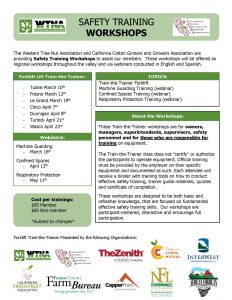
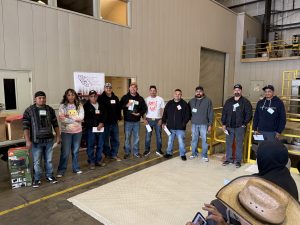
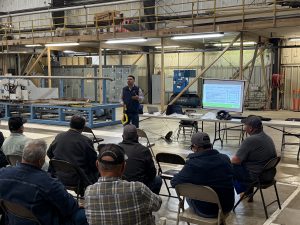
Our first regional training will be held in Tulare on March 10th! This year, the California Cotton Ginners and Growers Association, The Zenith, Fresno County Farm Bureau, Nisei Farmers League, California Fresh Fruit Association, California Citrus Mutual, InterWest Insurance Services, CopperPoint Insurance Companies, African American Farmers of California, and the Western Tree Nut Association are partnering to provide Forklift Safety Train- the-Trainer workshops.
As an update to our previous flyer news, the Forklift Train-the-Trainer workhops will be held in the following locations: Fresno, Tulare, Wasco, Le Grand, Turlock, and two additional locations in Dunnigan and Chico.
These workshops are designed for owners, managers, supervisors, safety personnel, and individuals responsible for employee training. Each participant will receive a comprehensive binder with the materials needed to understand applicable rules and regulations and to conduct effective forklift safety training. Attendees who complete the full class will also receive a certificate of completion.
In addition to the in-person workshops, the Association will host Machine Guarding, Confined Spaces, and Respiratory Protection webinars later this spring.
Training Cost:
· $65 per person (members)
· $85 per person (non-members)
For registration details and additional information about the workshops and webinars, please refer to the event flyer below.
2026 Regional Training Workshops
It’s that time of the year again! The Association is gearing up for the 2026 regional Train-the -Trainer workshops.
This year the California Cotton Growers Association, The Zenith, Fresno County Farm Bureau, Nisei Farmers League, California Fresh Fruit Association, California Citrus Mutual, InterWest Insurance Services, CopperPoint Insurance Companies, African American Farmers of California, and the Western Tree Nut Association are partnering to provide Forklift Safety Train- the-Trainer workshops.
Beginning in March, these bilingual (English and Spanish) trainings will include seven in-person Forklift Train-the-Trainer workshops held in the following locations: Fresno, Tulare, Wasco, Le Grand, Turlock, and two additional locations in Zamora and Chico (these two locations TBD).
These workshops are designed for owners, managers, supervisors, safety personnel, and individuals responsible for employee training. Each participant will receive a comprehensive binder with the materials needed to understand applicable rules and regulations and to conduct effective forklift safety training. Attendees who complete the full class will also receive a certificate of completion.
In addition to the in-person workshops, the Association will host Machine Guarding, Confined Spaces, and Respiratory Protection webinars later this spring.
Training Cost:
- $65 per person (members)
- $85 per person (non-members)
For registration details and additional information about the workshops and webinars, please refer to the event flyer or visit https://ccgga.org/.
Association Highlight Value of California Agricultural Leadership Program as Applications Open for Class 56
Applications are now open for Class 56 of the California Agricultural Leadership Program (CALP), a premier leadership development experience for mid-career professionals shaping the future of California agriculture.
Led by the California Agricultural Leadership Foundation (CALF), the program has developed more than 1,500 leaders over the past five decades, many of whom now serve in influential roles across agriculture, business, government, and their communities.
Our Association is proud to count Assistant Vice President Priscilla Rodriguez (Class 50) and Assistant Vice President of Technical Services Christopher McGlothin (Class 52) among Ag Leadership alumni. Both credit the intensive 18-month program with strengthening their leadership skills and expanding their impact within the agricultural industry and beyond.
Association member Jake Barcellos (Class 54), a fourth-generation farmer with A-Bar Ag Enterprises, described the program as transformational: “Ag Leadership pushed me to look inward and grow not just as a better farmer, but as a more intentional leader grounded in purpose. It shaped how I show up for my community and my family.”
Rodriguez emphasized the broader ripple effect of the experience: “The skills I gained—especially in communication, emotional intelligence, and critical thinking—have strengthened not only my professional effectiveness, but also how I support colleagues, members, and my community.”
McGlothin highlighted the program’s lasting influence: “The California Agricultural Leadership Program transformed and emboldened me beyond just my professional capabilities. I have used lessons from board rooms to the family dinner table, and I credit CALF with helping me develop the skills necessary to be a leader in agriculture today.”
The highly selective program includes leadership development, individualized coaching, and national and international travel seminars designed to broaden perspective and prepare fellows to lead in a complex, evolving industry. The Association strongly encourages members and industry professionals seeking to grow as leaders to apply.
Phase one applications for Class 56 are due March 27, 2026. More information is available at www.agleaders.org/class56apply.
Another Milestone for Sites Reservoir
The Department of the Interior today approved the Record of Decision for the Sites Reservoir Project, a major off-stream storage project in Northern California. The decision authorizes the Bureau of Reclamation to provide up to 25 percent of the total cost for the 1.5 million acre-foot off-stream reservoir, which will be located west of the Sacramento River near Maxwell. Designed to capture and store water during wet periods for use in dry years, the project will strengthen reliability for communities, agriculture and the environment across the state. The action reflects the Trump administration’s priority to expand water supply, enhance system resilience and reduce regulatory delays through the direction established in Executive Order 14181. The order has driven operational improvements that delivered more than 200,000 acre-feet of additional water to the Central Valley Project, enough to supply more than 500,000 people for a year by streamlining operations and capturing storm flows that historically could not be stored.
“President Trump made clear that federal water projects must deliver real results for American families,” said Secretary of the Interior Doug Burgum. “This administration is getting it done in record time. The Sites Reservoir Project and the gains achieved over the past year demonstrate how a disciplined, mission-focused approach can expand water reliability for communities, agriculture and the economy.” Sites Reservoir would further boost that supply. “Signing the Sites Reservoir Record of Decision represents a federal commitment to move a long-studied water storage project forward,” said Assistant Secretary for Water and Science Andrea Travnicek. “This decision reflects years of analysis, public engagement and coordination, and establishes the foundation for construction through sound partnerships that will ultimately result in additional water supplies for California.”
NCC Action Alert – Additional Economic Assistance
January 22, 2026
To: U.S. Cotton Industry Members
From: Gary Adams, President & CEO
Re: Additional Economic Assistance
On behalf of the National Cotton Council, the U.S. Peanut Federation, and USA Rice, we are issuing the following joint update and action alert on the state of play regarding additional economic assistance.
This week, the U.S. House of Representatives is considering the final four FY 2026 appropriations bills, which, in their current form, do not include additional agricultural assistance. The package would still need to pass the Senate before making its way to the President’s desk for signature before the current continuing resolution expires on January 30.
While the political prospects for additional economic assistance are unclear, it is essential that lawmakers continue to hear from producers about the ongoing economic crisis and reiterate the need to build on USDA’s Farmer Bridge Assistance (FBA) Program. Even if you know that your Member of Congress supports additional economic assistance, we urge you to contact them immediately and 1) thank them for supporting those efforts—like the Boozman/Hoeven expanded farm assistance framework—and for securing the Title I improvements to the farm safety net included in the One Big Beautiful Bill Act, 2) share personal anecdotes that convey the urgency for additional economic assistance, and 3) reiterate the need that Congressional leadership needs to help deliver bankable and timely assistance as soon as possible to help stabilize the farm economy.
On January 21, the American Farm Bureau Federation published a Market Intel report, “Farmers Continue to Face Losses Despite Aid,” which noted that per-acre production costs are projected to rise again in 2026, operating costs remain well above pre-2021 levels, and farmers will continue to operate below breakeven prices for yet another year. The report notes that even with ECAP and FBA payments, the net losses for cotton, peanuts, and rice are -$202, -$131, and -$210, respectively. The full report can be found here, and notes that accumulated losses over the past three crop years exceed $50 billion across the ag sector. Last week, our organizations also joined AFBF in a broad stakeholder letter, which noted “Even after including crop insurance, farm bill programs, support from the FBA program, the 2024 Emergency Commodity Assistance Program and the Marketing Assistance for Specialty Crops Program, losses for principal crops and specialty crops remain deep. This is why Congress needs to act.”
We are not asking lawmakers to oppose the appropriations package if assistance is not included, but rather to encourage them to remain engaged in the process and secure commitments from leadership to ensure that a package to expand coverage for the FBA program is considered in the near future, to allow bankable, timely assistance.
New Workplace Know Your Rights Act
In a recent press release, the California Department of Industrial Relations (DIR) announced that Senate Bill (SB) 294 enacted Labor Code sections 1550-1559, also known as the Workplace Know Your Rights Act. The Act requires that an employer provide an annual notice to their employees regarding certain workplace rights, including the right to have their employer notify a designated emergency contact if an employee is arrested or detained at work.
Annual Workplace Rights Notice
On or before February 1, 2026, and each year after that, an employer must provide employees a required workplace rights notice. The Labor Commissioner has posted model notices on its website that an employer can use, including versions in English and Spanish. Versions in Chinese, Tagalog, Vietnamese, Korean, Hindi, Urdu, and Punjabi will soon be posted. An employer must provide the notice in the language usually used to communicate employment-related information to the employee and which the employee understands, if the language is available as a template notice provided by the Labor Commissioner. The annual notice to employees must include seven categories of information spelled out in the statute, which include information about workers’ compensation, the right to notice of an I-9 inspection by immigration agencies, protection against unfair immigration-related practices, constitutional rights when interacting with law enforcement in the workplace, labor organizing rights, a description of new laws affecting workplace rights, and a list of the enforcement agencies that may enforce the underlying rights in the notice. By July 1, 2026, the Labor Commissioner also will post a video for employees advising them of their rights and a video for employers advising them of their rights and requirements. All postings will be on the Labor Commissioner’s Office website. An employer who violates the notice requirement shall be subject to a penalty of up to $500 per employee.
Notifying a Designated Emergency Contact of an Employee’s Arrest or Detention
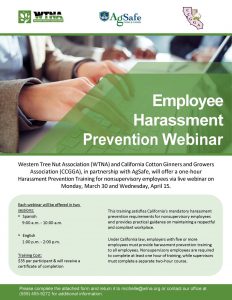
SB 294 requires that, if an employee has asked an employer to notify a designated emergency contact, an employer must notify the designated contact if the employee is arrested or detained on the worksite or, when an employer has actual knowledge, if the employee is arrested or detained during work hours but not on the worksite. Therefore, starting January 1, 2026, an employer must notify an emergency contact in the event of an arrest or detention as described above. By March 30, 2026, an employer must provide employees the opportunity to name emergency contacts and to indicate whether the emergency contact should be notified if the employee is arrested or detained. An employer who violates the requirements to notify a designated emergency contact shall be subject to a penalty of up to $500 per day per employee, with a maximum penalty of $10,000 per employee.
Fresno State Recognizes J.G. Boswell Foundation for Endowment Contribution
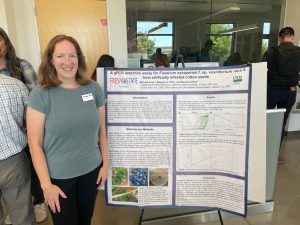
Last week, California State University Fresno leadership met at the Jordan Agricultural Research Center to recognize and thank the James G. Boswell Foundation for its generous contribution to the AgOne Foundation and the Jordan College of Agriculture. The endowment will help to support students within the Jordan College of Agriculture at Fresno State. Additionally, Fresno State has decided to name a research unit within the Jordan Agricultural Research Center as the J.G. Boswell Plant Pathology Laboratory. The J.G. Boswell Company has long-held ties with Fresno State, establishing the J.G. Boswell Foundation through a prior donation to the University, which established the Chair of Plant Pathology at the University. Dr. Margaret Ellis, current Chair, has conducted critical research on fusarium in cotton at Fresno State over the past couple of years.
Senior Director of Development of the Jordan College of Agriculture, and AgOne Executive Director, Shannon Fast-Birkner, kicked off the celebration by welcoming attendees, and emphasized how thankful the University is for industry contributions such as this. CSU Fresno President Dr. Saul Jiminez-Sandoval noted that the endowment would ensure that critical research to the agricultural industry would be fostered in the heart of the agricultural valley. Jordan College of Agriculture Dean Rolston St. Hilaire noted that, “This fund will work in perpetuity with the university to help foster innovation and research at the university for years to come.” Dr. Margaret Ellis, thanked the J.G. Boswell Company for their continued support on funding plant pathology research at the University. Speaking on behalf of the J.G. Boswell Company was CCGGA Board Member Jim Razor, who praised Fresno State for their continued support of the agricultural industry. Cameron Boswell wrapped up the comments by thanking Fresno State, and AgOne, for their continued support of the future leaders within the industry. Contributions like this make a significant impact on the Fresno State’s ability to help solve industry issues, and raise the bar for the future generations here in the Valley.
USDA Highlights Safety of US Produced Food
The U.S. Department of Agriculture (USDA) recently published the 2024 Pesticide Data Program (PDP) Annual Summary. The summary shows that more than 99 percent of the samples tested had pesticide residues below benchmark levels established by the Environmental Protection Agency (EPA). Each year, USDA and EPA work together to identify foods to be tested on a rotating basis by the PDP. In 2024, tests were conducted on 9,872 samples from 19 commodities of fresh and processed fruits and vegetables, nuts and fish. AMS partners with cooperating state agencies to collect and analyze pesticide residue levels on the selected food commodities. USDA tests a wide variety of domestic and imported foods, with a strong focus on foods that are consumed by infants and children. EPA relies on PDP data to conduct dietary risk assessments and to ensure that any pesticide residues in foods remain at or below levels that EPA has set. The data also provide regulators, farmers, processors, manufacturers, consumers and scientists with important insights into the actual levels of pesticide residues found on widely consumed foods.
The annual pesticide residue results are reported to the Food and Drug Administration (FDA) and EPA in monthly reports as testing takes place throughout the year. FDA and EPA are immediately notified if a PDP test discovers residue levels that could pose a public safety concern. In 2024, over 99 percent of the samples tested had residues below the tolerances established by the EPA with 42.3 percent having no detectable residue. Appendixes B, C, and D provide a distribution of residues by pesticide and their metabolites for the commodities tested. Residues exceeding the tolerance were detected in 0.77 percent (76 samples) of the total samples tested (9,872 samples). Of these 76 samples, 12 were domestic (15.8 percent), 63 were imported (82.9 percent), and 1 was of unknown origin (1.3 percent). Residues with no established tolerance were found in 3.7 percent (361 samples) of the total samples tested (9,872 samples). Of these 361 samples, 118 were domestic (32.7 percent), 230 were imported (63.7 percent), and 13 were of unknown origin (3.6 percent). Fresh and processed fruit and vegetables accounted for 9,165 samples or 92.8 percent of the total 9,872 samples collected in 2024. Fresh and processed fruit and vegetables tested during 2024 were: apples, avocados, blackberries (fresh and frozen), cherry tomatoes, cucumbers, head lettuce, leaf lettuce, onions, oranges, pineapples (fresh and frozen), potatoes, canned pumpkin, sweet corn (fresh and frozen), and tomatillos. Almonds accounted for 531 samples, or 5.4 percent of the total number of samples collected in 2024. Salmon accounted for 176 samples, or 1.8 percent of the total number of samples collected in 2024. Domestic samples accounted for 60.1 percent of all samples, while 38.9 percent were imports, 0.9 percent were of unknown origin, and less than 0.1 percent were of mixed national origin.