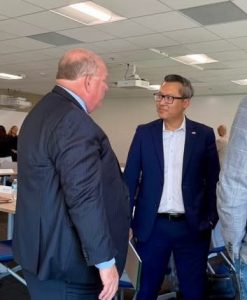
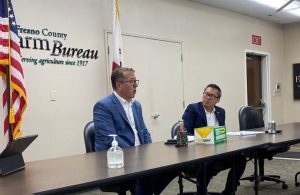
The Association was invited to attend and speak at two roundtable discussion with Congressman Vince Fong (CA- 20th) and Congressman Adrian Smith (NE-3rd) Chairman of the House Ways and Means Subcommittee on Trade. In the first meeting, which was focused on trade, Association President/CEO Roger A. Isom attended and spoke on behalf of the Association and focused his comments on the impact of not only tariffs, but the unfair cost of doing business in California. Isom discussed the impact of tariffs on almonds, walnuts and pistachios and having lost market share to Chile on walnuts going into India, and to Australia on almonds going into China. Isom highlighted the fact that 100% of the cotton, and more than 70% of tree nuts, grown in California are exported so tariffs have a significant impact. Isom also pointed to the significant input costs from water, labor, energy and environmental regulations as creating a significantly unfair playing field. He highlighted an example of having to purchase a new Tier 4 engine powered front end loader here for $360,000, while our counterparts in Australia can still purchase a Tier 0 engine powered loader for only $60,000. Isom stated “This is but one egregious example in the disparity in input costs between California and the rest of the country. Industry attendees at the meeting included almonds, pistachios, table grapes, potatoes, citrus, several county farm bureaus, the three major ports in California, railroad, and chemical companies.
In the second roundtable, which had a broader focus, representing the Association were Assistant Vice President Priscilla Rodriguez and Assistant Vice President of Technical Services Chris McGlothlin. Rodriguez reinforced the importance of international trade to California agriculture and discussed the need to maintain and expand export opportunities for the state’s cotton and tree nut industries. Rodriguez also spoke directly with Congressman Smith regarding the Buying American Cotton Act and encouraged his support of legislation that would provide incentives for the use of U.S.-grown cotton, helping strengthen domestic demand for American cotton producers. McGlothlin spoke on the finds of non-native pest species that could devastate the cotton industry in California, and encouraged federal agency readiness in the event those pests spread further.